Drones provide powerful tools for wildfire damage assessment, capturing high-resolution imagery and creating detailed orthomosaic maps that strengthen legal cases against negligent corporations. A California mountain wildfire lawyer may rely on this drone evidence to prove liability and recover compensation, but operators must comply with FAA Part 107 regulations and respect Temporary Flight Restrictions (TFRs) around disaster areas. Post-wildfire drone inspection can reveal damage patterns invisible from ground level, document hazard trees threatening structures, and create admissible evidence when proper chain of custody protocols are followed.
The Federal Aviation Administration enforces strict rules for drone operations near wildfire zones. Recent Remote ID requirements add another compliance layer for operators documenting property damage. Yet these aerial platforms offer unmatched capabilities for proving corporate negligence caused devastating losses.
Key Takeaways
- Commercial drone operations for legal documentation usually require Part 107 certification from the FAA, with specific protocols for maintaining evidentiary value
- Temporary Flight Restrictions (TFRs) can remain active weeks after fires, requiring operators to check NOTAMs and use the B4UFLY app before launching
- Orthomosaic mapping and 3D models can provide measurable evidence of damage extent, while thermal imaging reveals hidden structural problems
- Chain of custody documentation and EXIF metadata preservation could make drone footage admissible in litigation against utility companies
- Fees for professional drone pilots with photogrammetry experience for comprehensive property documentation vary depending on the property type, terrain, size, and location
Is It Legal to Fly a Drone After a Wildfire?
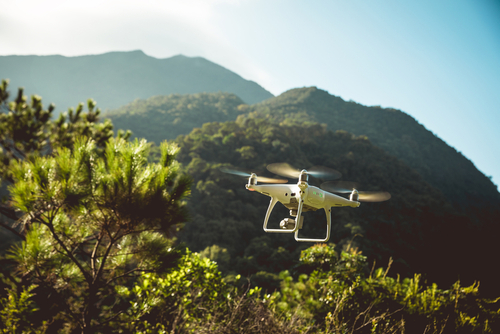
Wildfire TFRs restrict all aircraft, including drones, from entering disaster airspace without authorization. These restrictions protect firefighting aircraft and emergency responders working in hazardous conditions. The FAA issues NOTAMs (Notices to Airmen) establishing no-fly zones that may extend miles beyond visible fire perimeters.
Checking Current Flight Restrictions
The B4UFLY mobile app provides real-time airspace status for drone operators. Enter your planned flight location to view active TFRs, controlled airspace boundaries, and altitude restrictions. The app connects directly to FAA databases, providing authoritative information about current flight limitations.
TFRs typically remain active during initial recovery phases. Even after flames extinguish, aerial firefighting operations continue with water drops on hot spots. Medical helicopters evacuate injured residents. News helicopters document damage. These manned aircraft operations take priority over drone flights.
Understanding 14 CFR 91.137 Disaster Requirements
Federal regulation 14 CFR 91.137 governs aircraft operations in disaster areas. The rule establishes different TFR types based on operational needs. Firefighting TFRs completely prohibit unauthorized flights, while disaster relief TFRs may allow limited operations with coordination.
Property owners cannot fly drones in active TFRs without specific authorization. The restriction applies equally to recreational and commercial operators. Violations trigger substantial fines and potential criminal prosecution. The FAA takes TFR violations seriously, particularly those endangering emergency operations.
What Drone Data Stands Up in Court?
Drone evidence after wildfires must meet legal admissibility standards for litigation against corporate defendants. Courts require authentication of the evidence and may require testimony establishing accuracy. Properly collected drone data could provide compelling evidence of damage extent and causation patterns.
Establishing Evidence Collection Methods
Evidence integrity begins at data capture. Document every person handling memory cards, hard drives, or cloud uploads. Create detailed logs showing transfer dates, times, and purposes. Also, maintain original files without editing or compression.
Documentation elements that protect the integrity of your evidence include:
- Operator certification and flight logs showing compliance with regulations
- Equipment specifications including drone model, camera sensors, and GPS accuracy
- Environmental conditions during flights affecting image quality or GPS precision
- Storage methods preventing data corruption or unauthorized access
- Transfer protocols maintaining file integrity through legal proceedings
These records establish evidence reliability when challenging corporate defendants. Strong legal cases often depend on how to document property damage after a wildfire with the right evidence methods. Utility companies may employ technical teams to scrutinize evidence collection methods. Proper documentation defeats attempts to exclude drone evidence.
Photogrammetry and Orthomosaic Mapping
Photogrammetry software transforms overlapping drone photos into measurable 2D orthomosaics and 3D models. These products provide accurate documentation of burn severity, vegetation loss, and structural damage. Ground control points improve accuracy to centimeter-level precision.
Orthomosaic maps eliminate the perspective distortion present in standard photos. Every pixel represents consistent ground distance, enabling precise measurements. Attorneys use orthomosaics to calculate damaged acreage, destroyed tree counts, and erosion volumes. These measurable outputs directly support how damages are calculated in wildfire litigation when proving financial impact.
Drone Mapping for Wildfire Damage Assessment
Professional wildfire drone mapping can achieve what ground-based photography cannot. High-resolution sensors may pick up subtle damage patterns that even trained observers miss from the ground, like scorching patterns on tree canopies, erosion channels forming in burned soil, and structural weaknesses in remaining buildings. Drones following systematic flight patterns with proper overlap create seamless documentation without blind spots or missing sections.
Planning Effective Documentation Flights
Technical decisions shape the quality of your evidence. Flight altitude directly controls your ground sampling distance (GSD), which determines how much detail appears in the final images. Flying lower means capturing incredible detail, such as individual leaves on damaged trees, cracks in foundations, and ash patterns on structures, but it requires more battery changes and longer flight times. Higher altitudes let you document large properties efficiently, though you'll sacrifice the fine details that sometimes prove crucial in litigation.
RTK and PPK for Precision Mapping
When utilities try to dispute exactly where fires started or claim damage occurred outside their responsibility zones, centimeter-level accuracy becomes your strongest defense. Real-Time Kinematic (RTK) and Post-Processed Kinematic (PPK) technologies can transform consumer drones into survey-grade instruments by correcting the GPS errors.
These systems use ground-based reference stations to calculate your drone's exact position within 2-3 centimeters, providing the precision needed for property boundary disputes and accurate damage calculations. When utilities challenge where their equipment caused damage or dispute property lines, this precision mapping becomes invaluable evidence that exact damage locations fall within their responsibility zones.
Can I Fly on Federal Lands After a Wildfire?
National parks prohibit launching, landing, or operating drones without superintendent authorization. This ban applies regardless of wildfire impacts or documentation needs. The National Park Service maintains strict policies protecting wilderness character and visitor experiences.
Understanding Agency Restrictions
Different federal agencies impose varying drone restrictions. The U.S. Forest Service generally prohibits drone operations during active fire suppression. Their "If you fly, we can't" campaign emphasizes interference with aerial firefighting operations.
Bureau of Land Management and state lands may allow drone operations outside active fire areas. Check specific agency websites for current policies. Some agencies issue temporary permits for damage documentation. Others maintain blanket prohibitions regardless of circumstances.
Coordination with Land Management Agencies
Contact local agency offices before planning federal land flights. Explain documentation purposes and safety preparations. Some offices accommodate property owners documenting adjacent private land impacts, while others suggest alternative documentation methods.
Private property rights don't override federal airspace authority. Drones operating over private property from federal land takeoffs still violate agency rules. Plan flights originating and remaining over private property when possible. Respect agency boundaries even when documenting your own losses.
Using Thermal Imaging for Hidden Damage
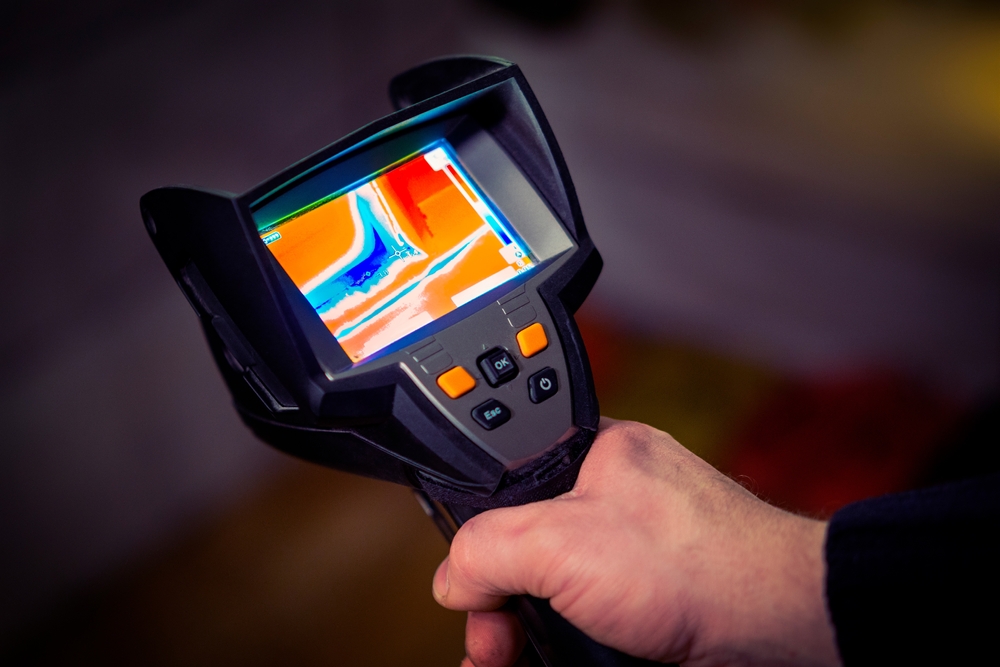
Thermal cameras reveal heat signatures indicating structural problems invisible in standard imagery. Hot spots in burned trees suggest ongoing combustion risks. Temperature variations in buildings indicate compromised insulation or moisture intrusion. This evidence strengthens claims for complete restoration funding.
Identifying Hazard Trees
Fire-damaged trees may burn from the inside out while appearing stable on the surface. These hidden dangers make thermal imaging invaluable for revealing what the naked eye misses. When thermal cameras detect elevated core temperatures days or weeks after the fire, they capture evidence of slow-burning decay that can transform living trees into hazards.
This thermal data becomes even more powerful when professional arborists interpret the heat signatures alongside their field observations. Their combined analysis creates documentation of specific hazards that require immediate removal, costs that corporate defendants may be liable for due to their negligence.
Detecting Structural Issues
Building materials absorb heat differently based on composition and condition. Thermal cameras reveal moisture penetration, insulation gaps, and structural deterioration. These hidden damages could escape initial insurance assessments.
Post-wildfire thermal inspection should document several conditions. Critical findings may include:
- Heat loss patterns indicating damaged insulation or air infiltration
- Moisture signatures showing water intrusion from firefighting efforts
- Temperature anomalies suggesting structural member deterioration
- Hot spots indicating electrical system damage requiring immediate attention
- Cold zones revealing missing or displaced building materials
Thermal evidence could support claims for comprehensive restoration beyond surface repairs. Corporate defendants bear responsibility for all damage their negligence caused, including hidden deterioration. These findings often connect with whether you can get compensation for smoke damage to your property, since insurers and utilities may dispute hidden contamination costs.
Hiring Professional Drone Pilots
Part 107 certified pilots bring technical skills and regulatory knowledge to documentation projects. Professional operators understand evidence requirements, maintain proper insurance, and follow safety protocols. Their experience could produce superior results compared to amateur efforts.
Evaluating Pilot Qualifications
Verify pilots hold current Part 107 certificates through the FAA Airman Registry. Request proof of liability insurance covering commercial operations and ask about specific wildfire documentation experience and equipment capabilities.
Qualified pilots should demonstrate photogrammetry knowledge and processing capabilities. Review sample orthomosaics and 3D models from previous projects. Confirm their understanding of the requirements for admissible legal evidence.
Cost Considerations for Professional Services
Professional drone documentation costs vary depending on property type, size, terrain complexity, and location. Larger agricultural or commercial properties, for example, could have higher fees than residential properties.
Basic documentation packages may include high-resolution photos and simple orthomosaic maps. Advanced services add 3D models, thermal imaging, and precision RTK mapping. Legal support services include chain of custody documentation and potential testimony. Consider documentation costs as investments in stronger legal positions against corporate defendants.
Just as important as choosing a qualified pilot is knowing how to find the right lawyer for wildfire litigation in California to ensure drone evidence is strategically used in your case.
Creating Admissible Evidence
Courts require specific procedures for admitting drone evidence in wildfire litigation. Proper preparation during collection prevents later admissibility challenges, and following established protocols protects evidence value throughout legal proceedings.
Metadata Preservation
Every drone photo contains hidden EXIF metadata that serves as a digital fingerprint for authentication in court. This embedded information includes timestamps showing exactly when images were captured, GPS coordinates pinpointing precise locations, and camera settings that explain how each image was created. Together, these details form an unbreakable chain connecting photos to specific moments and places during documentation flights.
Protecting this valuable metadata requires careful handling of image files from the moment they leave the drone. Original files must remain untouched by editing software that might strip away authentication data. Social media platforms pose particular risks, as they compress images and delete metadata during uploads. Instead, store original photos on write-protected media that prevents accidental changes.
Creating hash values provides mathematical proof that files remain unaltered over time, while detailed documentation of storage locations and access controls demonstrates proper evidence security throughout the legal process. This process reinforces why documentation is critical in a wildfire lawsuit, especially when defendants attempt to dispute the authenticity of drone evidence.
Supporting Documentation Requirements
Strong flight documentation transforms drone footage from simple photos into powerful legal evidence. Every documentation flight generates a paper trail that courts rely on when evaluating evidence credibility. Your records should paint a complete picture of each mission, from the weather conditions that day to the specific equipment you used and who was present during operations.
Flight logs tell the technical story behind your evidence collection. Recording takeoff and landing coordinates with precise times establishes when and where documentation occurred. Altitude and speed data explain your coverage patterns, while flight path information shows the systematic approach to capturing comprehensive damage documentation. When unexpected conditions arise—sudden wind gusts, equipment warnings, or visibility changes—noting these anomalies demonstrates transparency and attention to detail that judges and juries appreciate. Together, these details build an unshakeable foundation for evidence reliability when confronting corporate defendants in court.
Other Considerations for Drone Damage Documentation
Strong evidence comes from systematic approaches that capture your property's story from multiple angles, at different times, and under varying conditions. Planning several strategic flights may reveal damage patterns that single missions might miss, while coordinating with arborists, engineers, and environmental consultants creates a comprehensive picture of your losses.
Flight Timing Considerations
The window for capturing critical evidence opens the moment your property becomes accessible and starts closing immediately. Those first flights after the fire capture irreplaceable evidence, like ash distribution patterns that show fire intensity, smoke residue before rain washes it away, and debris fields that reveal how flames traveled across your land. Weather and cleanup crews alter these crucial details within days, making early documentation essential for proving what happened.
Return visits tell the continuing story of wildfire impacts that corporate defendants hope everyone forgets. Spring rains carve new erosion channels through burned soil, revealing slope instability that threatens remaining structures. Summer heat stress kills trees that initially survived, expanding the damage zone. Autumn winds topple weakened trees, creating new hazards. Each seasonal flight adds another chapter to your evidence, building an undeniable timeline that shows how one corporation's negligence continues destroying your property long after the flames died.
Coordinating with Legal Teams
Your attorney's litigation strategy may shape your drone documentation plan. Before launching, you and your lawyer may discuss what specific evidence could support your case.
Legal teams may need particular perspectives to tell your story effectively in court. Sweeping wide-angle shots establish the devastating scope of destruction across your entire property. Tight close-ups on individual losses, like a centuries-old oak or destroyed workshop, create emotional connections with judges and juries. Targeted evidence collection could directly support legal arguments about corporate negligence and causation.
FAQ for Wildfire Damage Assessment with Drones
Do I Need Part 107 Certification for Documentation?
Drone evidence for wildfire litigation falls under commercial use, requiring a Part 107 Remote Pilot Certificate. The FAA considers any drone operation advancing business interests as commercial activity. Documenting damage for legal claims, even your own property, constitutes commercial use under federal regulations. Certification helps ensure that drone-collected evidence supports the process of filing a wildfire lawsuit in California by meeting admissibility standards.
What if I Already Flew My Drone without Part 107 Certification?
Previous flights without proper certification don't necessarily invalidate documentation, but they can create complications. Consult with attorneys about evidence admissibility given the regulatory violation. Consider hiring certified pilots to re-document damages properly. Going forward, obtain Part 107 certification or work with licensed operators for any additional documentation needs.
How Soon after a Wildfire Can I Start Drone Documentation?
TFRs typically remain active for days or weeks after fires are controlled. Monitor the FAA's TFR website and B4UFLY app for status updates. Once restrictions lift, document immediately before conditions change. Weather, cleanup activities, and continued deterioration alter evidence daily. Early documentation captures best evidence for litigation.
Do Thermal Cameras Work through Smoke and Haze?
Thermal sensors detect infrared radiation that penetrates moderate smoke better than visible light. However, dense smoke still degrades thermal image quality. Plan thermal inspection flights during clearest conditions possible. Early morning often provides best visibility before afternoon winds increase particulate levels. Multiple flights may be necessary to capture quality thermal data.
What Resolution and Overlap Do I Need for Orthomosaic Evidence?
Legal documentation requires ground sampling distance of 1-2 inches per pixel for detailed analysis. Achieve this resolution by flying at 200-300 feet above ground level with appropriate sensors. Plan 75-80% forward overlap and 65-70% side overlap between images. Higher overlap improves orthomosaic quality and enables better 3D reconstruction. Processing software requires substantial overlap for accurate mapping.
Using Drone Evidence for Your Wildfire Lawsuit

Comprehensive drone documentation can strengthen wildfire cases against negligent corporations. High-resolution imagery, thermal inspection, and precision mapping prove damage extent beyond insurance limitations. When utility companies and other corporations cause devastating fires through negligence, properly collected drone evidence supports demands for complete compensation.
Bernheim Law Firm leverages advanced documentation techniques holding corporations accountable for wildfire devastation. With over $400 million recovered for fire victims, the firm understands how compelling evidence drives successful litigation.
Call 1-800-WILDFIRE today for a case evaluation and discover how strategic evidence collection supports your fight for fair compensation.