Wildfire property damage claims against negligent corporations require thorough documentation of tree mortality, soil contamination, and ecosystem destruction to pursue compensation beyond insurance limits. When utility equipment sparks blazes or corporate negligence allows flames to spread, property owners face unique challenges recovering costs for mature trees, irrigation systems, and habitat restoration that insurance policies rarely cover adequately. An experienced California mountain fire lawyer can help guide property owners through this complex process and build a strong case for recovery.
Corporate liability for wildfire damages may extend far beyond what insurance provides. Utility companies can bear responsibility for fires caused by faulty power lines, inadequate vegetation management, and deferred maintenance. Property owners may be compensated for their losses when corporate negligence destroys their land.
Key Takeaways
- Document environmental damage immediately, including tree mortality assessments, soil contamination tests, and erosion patterns, before cleanup begins
- Insurance policies typically limit landscaping coverage to small percentages, but you may be able to pursue the responsible corporations for actual damages
- Utility-caused wildfire claims provide compensation beyond insurance limits through inverse condemnation laws in California
- Professional arborist reports and environmental assessments can strengthen legal cases by quantifying long-term impacts and restoration costs
- Examples of corporate negligence patterns can include deferred maintenance, safety violations, and profit-driven decisions that prioritize shareholders over community safety
Understanding Insurance Limitations for Smoke and Ash Damage
Homeowner's policies may cover some wildfire smoke and ash damage, but coverage can fall far short of actual losses. Smoke infiltrates HVAC systems, penetrates walls, and embeds in furniture fabric. Ash corrodes metal surfaces and contaminates insulation. Insurance companies often minimize these damages, offering basic cleaning when comprehensive remediation is necessary.
Documenting Smoke Contamination for Legal Action
Professional testing provides crucial evidence for litigation against responsible parties. Indoor air quality specialists measure particulate matter (PM2.5) levels throughout properties. Laboratory analysis identifies toxic compounds in settled ash. These scientific reports prove contamination levels requiring extensive restoration that insurance rarely covers fully.
Photographic evidence strengthens legal cases against negligent corporations. Before-and-after images show ash accumulation on surfaces, discoloration of walls, and damage to outdoor equipment. Time-stamped photos create visual timelines of progressive damage during prolonged smoke events. This documentation is critical evidence in a wildfire lawsuit, and specifically when pursuing corporate defendants.
HEPA Cleaning and Remediation Beyond Insurance
Professional smoke remediation sometimes exceeds what insurance typically covers. HEPA filtration systems remove microscopic particles from air and surfaces, and treatments may be required to neutralize odors embedded in porous materials. Duct cleaning prevents ongoing contamination from HVAC systems.
When insurance falls short, property owners must seek compensation from responsible parties. Environmental hygienist reports can justify comprehensive cleaning protocols. These reports detail health risks and support damage calculations in litigation. Corporate defendants may be liable beyond insurance; they might have to pay for complete restoration, not just minimal insurance allowances.
Landscaping Coverage Gaps and Corporate Liability
Standard policies typically impose limits on landscaping damage compensation. Mature oak trees worth tens of thousands face these same restrictions. When corporations cause wildfires, they may bear responsibility for actual landscape values, not insurance limitations.
Recognizing Coverage Shortfalls
Insurance companies categorize landscaping as secondary coverage with multiple sub-limits. For instance, a $500,000 home policy might only allow $25,000 total landscaping coverage. Individual tree limits further restrict recovery. A century-old heritage tree could receive the same $500 as newly planted shrubs under insurance policies.
Hardscaping elements face similar restrictions. Stone walls, decorative boulders, and water features may fall under separate coverage categories, and some policies exclude certain landscape features entirely. These limitations highlight why legal action against responsible corporations becomes necessary for fair compensation.
Building Your Landscaping Damage Case
Detailed inventories support litigation against corporate defendants. When necessary, testimony from experts may help to support a claim. For example, professional arborists can assess tree values based on species, size, and condition before fire, while landscape architects can calculate replacement costs for mature specimens.
Evidence for corporate liability cases includes several key components. Property owners must gather comprehensive documentation showing:
- Pre-fire landscape photography capturing mature trees and established plantings
- Professional appraisals determining actual replacement values for destroyed vegetation
- Ecological impact assessments quantifying habitat loss and watershed damage
- Restoration proposals with detailed costs for returning land to pre-fire condition
- Economic analyses showing diminished property values from landscape destruction
This documentation proves damages that corporate defendants must address. Unlike insurance claims with limits, litigation seeks actual compensation for losses caused by corporate negligence.
State Debris Removal Programs and Corporate Responsibility
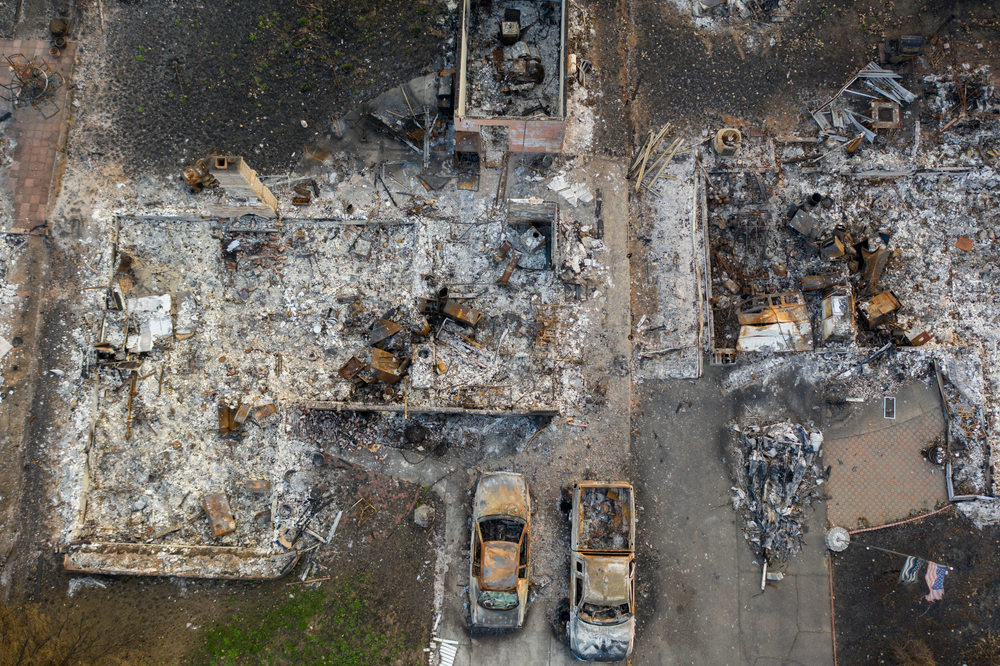
State and county debris removal programs clear fire-damaged properties at no cost to owners. California's Right-of-Entry (ROE) process allows government contractors to remove hazardous materials, foundations, and burned vegetation. While these programs help with immediate cleanup, they don't address compensation for losses caused by corporate negligence.
ROE Programs and Preserving Legal Rights
Property owners sign agreements allowing government access for debris operations. CalRecycle manages California's program, coordinating with county agencies. Contractors remove ash, concrete, metal, and hazardous materials. The process includes soil scraping to remove contamination.
Participating in ROE programs doesn't affect rights to pursue corporate defendants. Government cleanup addresses public safety, not private compensation. Documentation during debris removal may strengthen legal cases, including photographs of removed materials, contamination levels, and damage extent to support litigation against responsible parties.
Hazard Tree Removal After Corporate-Caused Fires
Dead and dying trees pose ongoing threats after wildfires pass. Weakened root systems and burned trunks create fall risks. State programs reimburse some removal costs for trees threatening life and property. However, these programs don't compensate for tree values when corporations cause fires.
Cal OES coordinates hazard tree assessments and removal authorization. While government programs handle immediate safety concerns, property owners can pursue responsible corporations for actual tree values. Mature specimen trees, in particular, represent significant assets destroyed by corporate negligence.
FEMA Assistance Versus Corporate Liability
FEMA Individual Assistance provides emergency support but doesn't replace pursuing responsible corporations. The program covers some uninsured losses and immediate needs. Benefits include temporary housing, home repairs, and disaster-related expenses. However, FEMA assistance represents a fraction of actual damages from corporate-caused fires.
FEMA's Limited Role in Recovery
Registration opens immediately after presidential disaster declarations. Online applications through DisasterAssistance.gov streamline the process. FEMA provides basic assistance for immediate needs, while longer-term recovery requires additional resources.
FEMA assistance addresses only essential needs through limited programs. Government aid provides minimal support, including:
- Temporary housing assistance during initial displacement periods
- Basic home repairs making properties minimally habitable
- Essential personal property replacement for necessary items
- Emergency transportation assistance for destroyed vehicles
- Immediate medical costs related to disaster injuries
These programs offer emergency relief, not comprehensive compensation. Property owners suffering losses from corporate negligence need legal representation to recover actual damages beyond government minimums.
Why Corporate Defendants Owe More Than FEMA Provides
Recovery funding from FEMA and insurance combined may not approach actual losses. Government aid addresses immediate survival needs, and insurance covers basic policy limits. Neither source compensates for negligent corporate conduct that caused disasters.
Corporate defendants bear responsibility for the damages their negligence causes. This includes property values, landscape restoration, environmental cleanup, and quality of life impacts. Legal action seeks accountability and fair compensation, unavailable through government programs or insurance.
Additional Living Expenses and Corporate Accountability
Insurance Additional Living Expenses (ALE) coverage helps families during displacement, but usually has strict limits. Policies cover some hotel costs, rental homes, and increased expenses. Coverage typically provides 12-24 months of benefits with dollar caps. When corporations cause displacement through negligence, they owe compensation beyond these limits.
Documenting Displacement Costs
Additional living expenses encompass costs exceeding normal household spending. Insurance may cover basic increases, but corporate defendants must address total displacement impacts. Extended evacuations, repeated relocations, and prolonged recovery create expenses that insurance may not have anticipated.
Documentation proves ongoing costs from corporate-caused disasters. Receipts show actual expenses incurred. Comparison with pre-fire spending demonstrates increased costs. Credit card statements provide comprehensive records. Detailed logs track accumulating expenses. This evidence supports damage calculations in litigation against responsible corporations.
Long-Term Displacement From Corporate Negligence
Insurance ALE coverage exhausts quickly during extended displacement. Policy limits cap payments regardless of ongoing needs. A family might spend their ALE benefits within months while their property remains uninhabitable for years due to corporate-caused environmental damage.
Corporate defendants may be liable for actual displacement duration and costs. Unlike insurance with arbitrary limits, legal accountability addresses real impacts.
Pursuing Utility Companies for Wildfire Damages

It is possible to sue utility companies for wildfire damages when their equipment failures spark destructive fires, making them legally liable for the resulting destruction. Power line malfunctions, transformer explosions, and inadequate vegetation management create ignition sources. California's inverse condemnation doctrine holds utilities strictly liable for fire damages from their equipment, providing recovery beyond insurance limits.
Building Your Case Against Utility Companies
CAL FIRE investigations can determine fire causes and origins. These reports identify responsible parties, equipment failures, poor maintenance, and safety violations supporting negligence claims.
Documenting property damage requires a comprehensive approach for litigation. Essential evidence for utility liability cases includes:
- Pre-fire property photographs showing landscaping and environmental features
- Professional appraisals valuing mature trees and specialty plantings
- Ecological assessments quantifying habitat and watershed impacts
- Restoration plans with detailed cost estimates for complete recovery
- Economic analyses calculating lost property values and use enjoyment
Utility settlements and verdicts address total losses, not just insured amounts. Comprehensive documentation strengthens cases against utility companies.
Timeline for Legal Action
If you're wondering about the deadlines for filing a wildfire claim, government entities require claims within six months of wildfire damages. Private utility companies face different statutory deadlines. California provides three years for property damage claims, and federal court jurisdiction may have different deadlines.
Early action preserves evidence and witness testimony. Fire scenes change rapidly through cleanup and weather. Prompt investigation strengthens litigation positions against corporate defendants.
Environmental Contamination From Corporate Negligence
Wildfire ash contains heavy metals, asbestos, and chemical residues from burned structures. These contaminants penetrate soil, affecting plant growth and water quality. When corporate negligence causes fires, companies bear responsibility for environmental restoration beyond basic insurance coverage.
Testing Requirements for Legal Cases
Properties near burned structures face the highest contamination risks. Lead paint, asbestos siding, and treated lumber create toxic ash. Wind spreads contamination across neighboring properties, and steep slopes concentrate runoff contamination in lower areas.
Agricultural properties require extensive testing protocols for litigation. Vineyards test soil and grape samples for smoke taint. Organic farms verify contamination levels affecting certification. Livestock operations analyze feed and water sources. Testing establishes baselines for damage calculations against corporate defendants.
Remediation Costs and Corporate Liability
Soil remediation ranges from simple amendments to complete replacement. Minor contamination requires pH adjustment and the addition of organic matter. Severe contamination necessitates soil excavation and replacement. For large properties, remediation costs can escalate quickly.
Professional remediation protects long-term property values. Environmental consultants develop remediation plans meeting regulatory standards. Corporate defendants must pay for approved cleanup protocols. Final testing confirms successful contamination removal. Insurance rarely covers these costs, making legal action essential. Corporations causing environmental contamination through negligence bear full remediation responsibility.
FAQ for Wildfire Property Damage Claim
How Do I Know if I Have a Case against a Utility Company for Wildfire Damages?
CAL FIRE investigations may identify ignition sources and responsible parties. If investigations point to utility equipment, power lines, or maintenance failures, you could have grounds for legal action. Utility companies in California face strict liability for fires caused by their equipment under inverse condemnation laws. Even without finding negligence, utilities must compensate for damages their equipment causes. Contact an attorney immediately to preserve evidence and meet filing deadlines.
What Damages beyond Insurance Can I Recover from Corporate Defendants?
Corporate liability extends beyond insurance limitations. Recovery may include actual tree and landscape values, not policy sub-limits. Environmental testing and remediation costs, often excluded from insurance, could become compensable. Lost property values, extended displacement costs exceeding ALE limits, and quality of life impacts all factor into corporate liability. Emotional distress, loss of irreplaceable items, and community impacts may also apply.
When Do I Need an Attorney versus Handling Insurance Myself?
While property owners may handle insurance claims directly, pursuing corporate defendants requires legal representation immediately. Utility companies and other corporations have legal teams that may conduct investigations, gather evidence, and contact affected property owners quickly. Attorneys understand inverse condemnation laws, preserve critical evidence, and calculate damages beyond insurance coverage. Initial consultations help evaluate whether corporate negligence contributed to your losses.
How Long Do Utility Wildfire Lawsuits Typically Take to Resolve?
Utility wildfire litigation proceeds on different timelines than insurance claims. Civil cases may take several months or years to resolve, becoming longer if it is necessary to go to trial. Class action participation might accelerate compensation through group settlements. Individual cases allow more control over timing and terms. Factors affecting duration include CAL FIRE investigation completion, the number of affected properties, and utility company cooperation.
What if My Property Has Both Insurance Coverage and a Claim against a Utility?
Insurance provides immediate relief while utility litigation proceeds. If you accept insurance payments for covered losses, these may not represent complete compensation for the damages you sustained. Insurance companies may pursue subrogation against utilities, but this doesn't prevent your independent claims for uninsured or underinsured losses. Legal representation coordinates both processes, helping coordinate your total recovery.
Getting Help with Your Wildfire Property Damage Case

Wildfire recovery demands aggressive advocacy against corporations whose negligence destroyed your property and landscape. Insurance limitations leave families struggling to rebuild homes and restore cherished environments. When utility failures or corporate negligence cause catastrophic losses, property owners may need experienced legal representation fighting for compensation beyond insurance limits.
Bernheim Law Firm stands firmly against utility companies responsible for California's catastrophic wildfires. With over $400 million recovered for wildfire victims, the firm's aggressive litigation strategies secure compensation exceeding insurance payouts.
Call 1-800-WILDFIRE today for a free case evaluation and learn how dedicated wildfire litigation attorneys fight for your recovery from those responsible for your losses.